Reader Dispatch - Rereading a Book I Thought I Already Knew

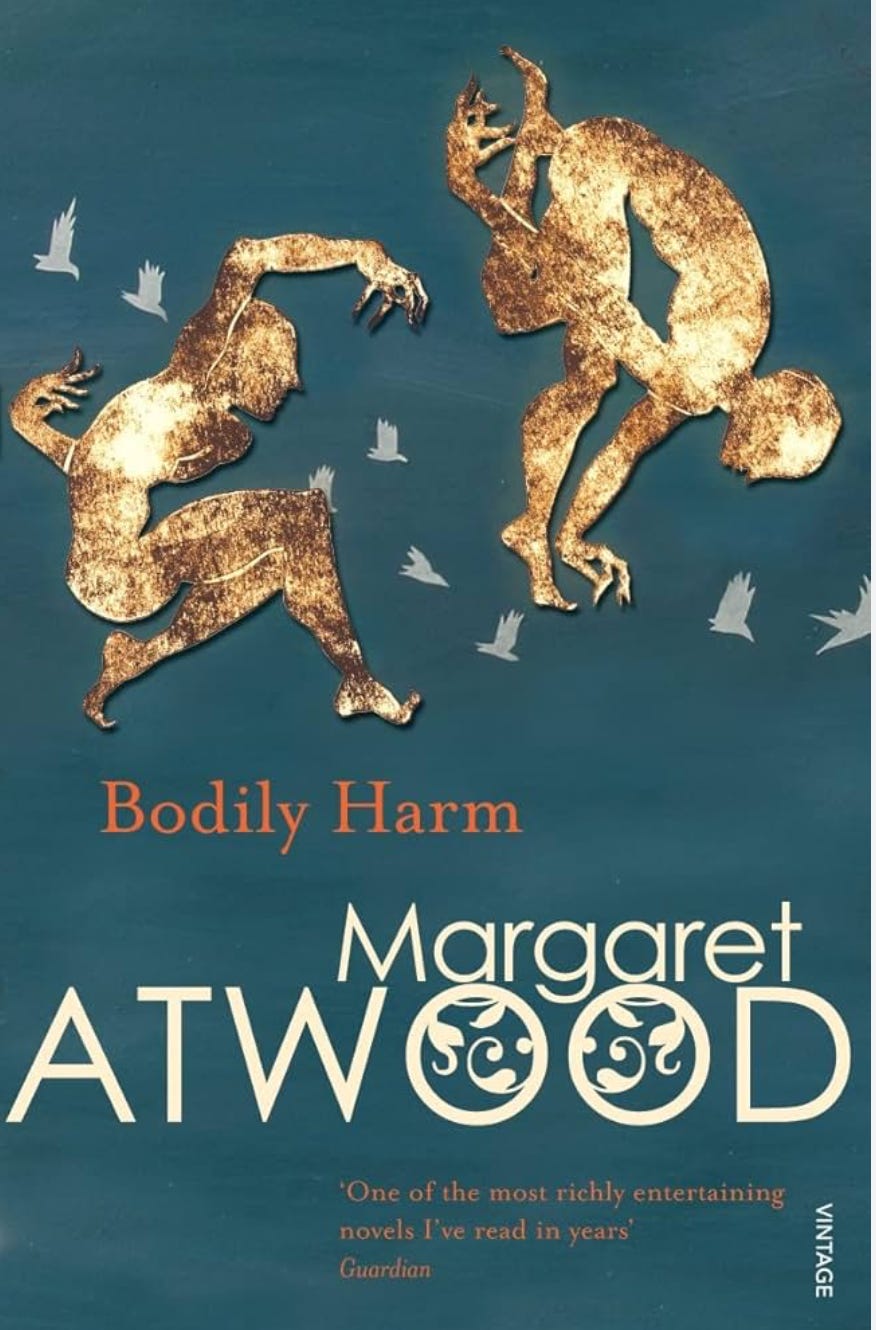
I picked up Atwood’s Bodily Harm this week — a book I first read when I was young enough to think I understood everything. Back then it registered as lean, even simple: a woman in crisis, a political backdrop, Atwood’s clipped, crystalline sentences. I remember finishing it and thinking, Yes, that was sharp. Efficient. Controlled.
This time, it was none of those things.
What startled me wasn’t that the book had changed — books don’t mutate when our backs are turned — but that my earlier reading had been shallow in ways I couldn’t see. I’d mistaken clarity for simplicity. I’d collapsed “clean prose” into “straightforward meaning.” I’d taken the narrator’s numbness at face value instead of noticing how violently the world was pressing against it.
That blindness is the part I keep circling. Why was I so certain I’d grasped it the first time? What made me flatten a book that is, in fact, built on unease, dissonance, double exposure?
There’s a pattern here — not just with Atwood. The books I thought I “got” in my twenties are the ones that now feel the most bottomless. Back then, I read for plot, for movement, for shape. Now I read for fracture. For pressure. For what the writer hides in the margins because the characters can’t bear to look directly at it.
Re-reading Bodily Harm made something uncomfortable click into place:
The problem wasn’t that the book was simpler than I remembered. The problem was that I was.
This is what interests me now. Which books reward re-reading not because they’ve aged well, but because we have acquired enough damage or insight or contradiction to finally meet them at the right depth?
So that’s this week’s question for you:
What book did you return to — and discover you had underestimated entirely?
Not a favourite that held up. A book that revealed it was playing a far more complex game than the one you thought you’d read.
Reply here — I’ll gather a few responses for Sunday’s micro-essay.
What I’ve Been Reading and Thinking
Essay: Leslie Jamison, “Grand Unified Theory of Female Pain”
A razor-sharp piece about the stories we’re allowed to tell about our own wounds.
Interview: Björk on Iceland: ‘We don’t go to church, we go for a walk’
Björk’s thoughts on landscape-as-identity fed straight into the Iceland project I’m drafting again this week.
A Quote I Underlined:
“The creative adult is the child who has survived.” - Ursula K. Le Guin
From the Desk
This week: an essay on Pillion and what it reveals about queer and kink representation in mainstream culture, plus a WIP drop from the new novel toward the end of the week, both for paid subscribers.
In the Notes
This week’s open thread:
Reply there — I’ll gather a few responses for Sunday’s micro-essay.
Free for the diary. Paid for the blood.